

The Arthritis Society of Iceland
- 530 3600
- Brekkuhúsum 1
- gigt@gigt.is
- Monday - Thursday: 9:00 - 15:00
- 530 3600
- Brekkuhúsum 1
- gigt@gigt.is
- Monday - Thursday: 9:00 - 15:00
Juvenile rheumatoid arthritis
Juvenile rheumatoid arthritis

What is juvenile arthritis?
Juvenile rheumatoid arthritis (also called Juvenile arthritis or idiopathic juvenile arthritis (JIA) is a chronic inflammatory disease that affects the joints in children and adolescents under the age of 16. It is an autoimmune disease where the immune system attacks its own cells, causing inflammation in the joints.
Who gets childhood asthma?
Juvenile arthritis can occur in children of all ages, from infants to adolescents, but it is generally diagnosed in children under the age of 16. It is rare, but is still the most common form of arthritis in children.
Who is most likely to get juvenile arthritis?
- Children of all ages – Can start with children as young as one year old.
- Girls are at greater risk than boys – especially in certain types, such as oligoarticular JIA and polyarticular JIA.
- Heredity can play a part – If parents or relatives have autoimmune diseases (such as arthritis, psoriasis or Crohn's disease), there is an increased risk.
- Environmental factors could have an impact – Viral infections, stress or other environmental factors could potentially trigger the disease in those with a genetic predisposition.
Juvenile arthritis is not caused by the child's lifestyle or any kind of injury. It is an autoimmune disease where the immune system mistakenly attacks its own joints.
If a child shows symptoms such as persistent joint inflammation, stiffness or pain, it is important to see a doctor as soon as possible to ensure a correct diagnosis and treatment.
What are the symptoms of juvenile arthritis?
- Swelling and joint pain – Common in knees, wrists and ankles.
- Stiffness – Especially in the morning or after rest.
- Fever and fatigue – Some types can cause general symptoms such as fever, loss of appetite and fatigue.
- Rash – In some cases, children may develop a skin rash in conjunction with the illness.
- Eyes – Can affect the eyes (uveitis), which can lead to vision problems if not treated.
When should you see a doctor?
It is important to consult a doctor if a child shows symptoms that could suggest juvenile arthritis. The sooner diagnosis and treatment begin, the better the prospects of preventing long-term damage to the joints and other organs.
See a doctor if your child:
- Swollen joints – Especially if the inflammation persists for several weeks without an obvious cause.
- Complains of joint pain – Especially in the morning or after being still.
- Is stiff and stiffness does not improve quickly after the child starts walking.
- Has a persistent fever – Which comes and goes without explanation and is not related to an infection.
- Suffering from fatigue and loss of appetite – Along with other symptoms such as a rash or weakness.
- Changes in the eyes – Red eyes, sensitivity to light or visual disturbances can indicate arthritis-related inflammation of the eye (uveitis).
- Has unexplained rash along with joint pain and/or fever.
If your child shows any of these symptoms for a long time, or if they worsen, you should book an appointment with a GP or a paediatrician. If juvenile arthritis is suspected, the child will often be referred to a paediatric rheumatologist for further diagnosis and treatment.
Early diagnosis and treatment can make all the difference!
How is juvenile arthritis diagnosed?
Diagnosis of juvenile arthritis involves several steps:
- Medical history and symptoms – The doctor asks about joint pain, stiffness, swelling, fever and a family history of autoimmune diseases.
- Physical examination – Assessment of swollen joints, range of motion, skin rashes and eye symptoms.
- Blood tests – To measure inflammation (ESR, CRP) and check for autoimmune diseases (RF, ANA).
- Imaging – X-ray, ultrasound or MRI to see changes in the joints.
- Exclusion of other diseases – Infections, musculoskeletal diseases, etc.
A diagnosis is confirmed if symptoms persist for at least 6 weeks and no other explanation is found.
Treatment for juvenile arthritis
- Anti-inflammatory medication (NSAID) – To reduce pain and inflammation.
- Physiotherapy – Helps to maintain mobility.
- Biological or immunosuppressive drugs – Used if the disease is severe.
- Steroids – In some cases to treat a acute exacerbation.
What can patients do themselves?
Patients can help themselves with regular exercise (e.g. swimming and yoga), a healthy diet, sufficient sleep and stress management. Heat and cold therapy can reduce pain, and it is important to take medication as prescribed and have regular medical check-ups.
What are the prospects?
Some children grow out of the disease, but for others it can become chronic. With the right treatment, most children can live a normal life with minimal limitations.
If you are concerned about juvenile arthritis or know a child with symptoms, it is important to consult a doctor for further diagnosis and treatment.
Further material

The Arthritis Society Summer Raffle 2026 Winners' List
7 September 2026
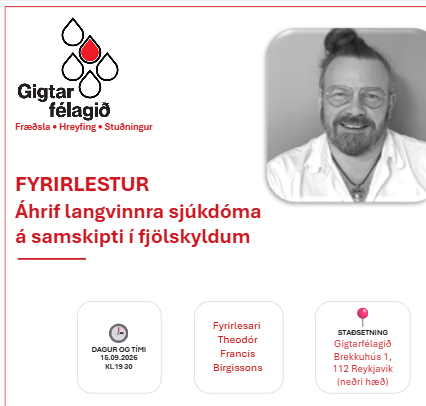
Lecture – The impact of chronic illnesses on family communication
1 September 2026

Chair exercises – New
25 August 2026