

The Arthritis Society of Iceland
- 530 3600
- Brekkuhúsum 1
- gigt@gigt.is
- Monday - Thursday: 9:00 - 15:00
- 530 3600
- Brekkuhúsum 1
- gigt@gigt.is
- Monday - Thursday: 9:00 - 15:00
Arteritis
Arteritis

What are vasculitis?
Vasculitis is an inflammatory disease of the blood vessels that can affect the large, medium, or small vessels in the body. The inflammation can cause the vessels to narrow, weaken, or close, which impairs blood flow to organs and tissues.
Who gets vasculitis
Who gets vasculitis?
- Adults and the elderly – Some types, such as giant cell arteritis, are more common in people over 50.
- Young people and children – Diseases such as Kawasaki syndrome affect children, especially those under the age of 5.
- People with autoimmune diseases – Conditions such as arthritis, lupus and psoriasis increase the risk of vasculitis.
- Smokers – Smoking can increase the risk of certain types of vasculitis, e.g. Buerger's disease.
- People with infections – Some viral infections, such as hepatitis B or C, can cause vasculitis.
- Genetics and family history – People with relatives who have autoimmune diseases may be at an increased risk.
- People who take certain medicines – Some medicines can cause immune system reactions that lead to vasculitis.
If you belong to a high-risk group or are experiencing symptoms such as fatigue, a rash, aches or vision problems, it is a good idea to speak to a doctor. Would you like information about a specific type of vasculitis?
What are the symptoms of vasculitis?
What are the symptoms of vasculitis?
- Pain and fatigue – Inflammation in the blood vessels can cause general malaise and a lack of energy.
- Heat and swelling – The skin may become red or sore over swollen blood vessels.
- Numbness or weakness – If blood flow to the limbs decreases, it can cause numbness or weakness.
- Rashes and bleeding in the skin – Small vessel inflammation can cause red spots or bruises on the skin.
- Vision problems or headaches – Sometimes inflammation in the blood vessels can affect the eyes and brain.
When should you seek medical attention?
When should you see a doctor?
- Persistent fatigue and general malaise that is not explained by other causes.
- Unexplained aches and pains in the joints, muscles or limbs.
- Rashes or bruises that appear suddenly without any injury.
- A fever that recurs or lasts for a long time without an apparent cause.
- Difficulty breathing or a persistent cough, which could indicate inflammation in the lungs.
- Headaches or visual disturbances such as blurred vision or temporary blindness.
- Numbness, weakness or a cold sensation in the limbs, which could indicate reduced blood flow.
If you experience serious symptoms such as sudden vision loss, chest pain or severe difficulty breathing, go to A&E immediately.
How is vasculitis diagnosed?
How is vasculitis diagnosed?
The diagnosis of vasculitis consists of:
- Medical history and physical examination – Assessment of symptoms, blood flow and general condition.
- Blood tests – Measurements of inflammation (CRP, ESR) and immunological markers (ANCA, ANA).
- Urine test – To check for protein or blood in the urine, which can indicate inflammation of the kidneys.
- Imaging investigations – Ultrasound, CT scan or angiography to assess damage to the arteries.
- Tissue sample (biopsy) – Taken from the skin, kidneys or other organs to confirm inflammation.
If the diagnosis confirms vasculitis, treatment begins with anti-inflammatory or immunosuppressive drugs.
Medicine for varicose veins
Medicine for varicose veins
Medicines for vasculitis are used to reduce inflammation, suppress the immune system and prevent damage to the blood vessels and organs.
Main drug classes:
- Anti-inflammatory medicine
- Steroids (prednisone) – The most common treatment to reduce inflammation quickly.
- NSAIDs (ibuprofen, naproxen) – Used for milder symptoms.
- Immunosuppressant drugs
- Methotrexate, azathioprine or mycophenolate mofetil – Help to control the immune system.
- Cyclophosphamide – A stronger drug used in severe cases.
- Biopharmaceuticals
- Rituximab – Used for certain types of vasculitis, e.g. ANCA-positive vasculitis.
- Tocilizumab – Used for giant cell arteritis.
- Blood thinner
- Sometimes used if there is a risk of a blood clot due to damage to the veins.
Treatment is tailored to each patient and depends on the type of vasculitis and the severity of the disease.
What can patients do themselves?
What can patients do themselves?
Patients with vasculitis can do the following to relieve symptoms and promote recovery:
- Rest can help to reduce strain on the veins and decrease inflammation.
- Hot or cold compresses: Hot compresses can reduce inflammation and pain, while cold compresses can reduce swelling.
- Elevating your legs: Elevating your legs can help to improve blood flow and reduce swelling.
- Sometimes, wearing support stockings (with a doctor's permission) can help to improve blood flow.
- Avoid long periods sitting or being in the same position for a long time: It is good to move regularly and avoid being in the same position for a long time.
- Medical treatment: Follow your doctor's instructions regarding anti-inflammatory or blood-thinning medication.
It is important that patients see a doctor if symptoms worsen or if they have any concerns.
What are the prospects?
What are the prospects?
The outlook for patients with phlebitis is generally good, especially if the condition is treated promptly. Most cases, particularly superficial thrombophlebitis, resolve with treatment, and patients make a full recovery after a few weeks. If it is deep vein thrombosis (DVT), it can be more serious and increase the risk of complications such as a pulmonary embolism, but with the correct treatment (such as blood-thinning medication), the outlook is also very good.
The impact of the illness depends on the severity of the inflammation and whether treatment is started early enough. With a healthy lifestyle, regular check-ups and adherence to treatment, most people can return to a normal life.
Further material

The Arthritis Society Summer Raffle 2026 Winners' List
7 September 2026
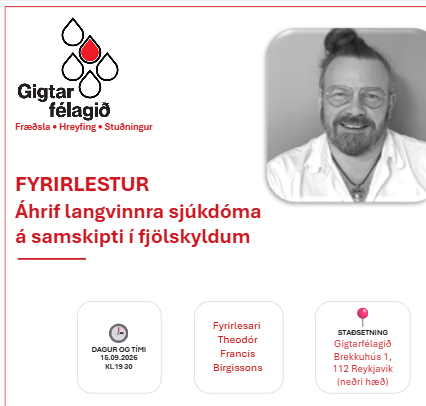
Lecture – The impact of chronic illnesses on family communication
1 September 2026

Chair exercises – New
25 August 2026